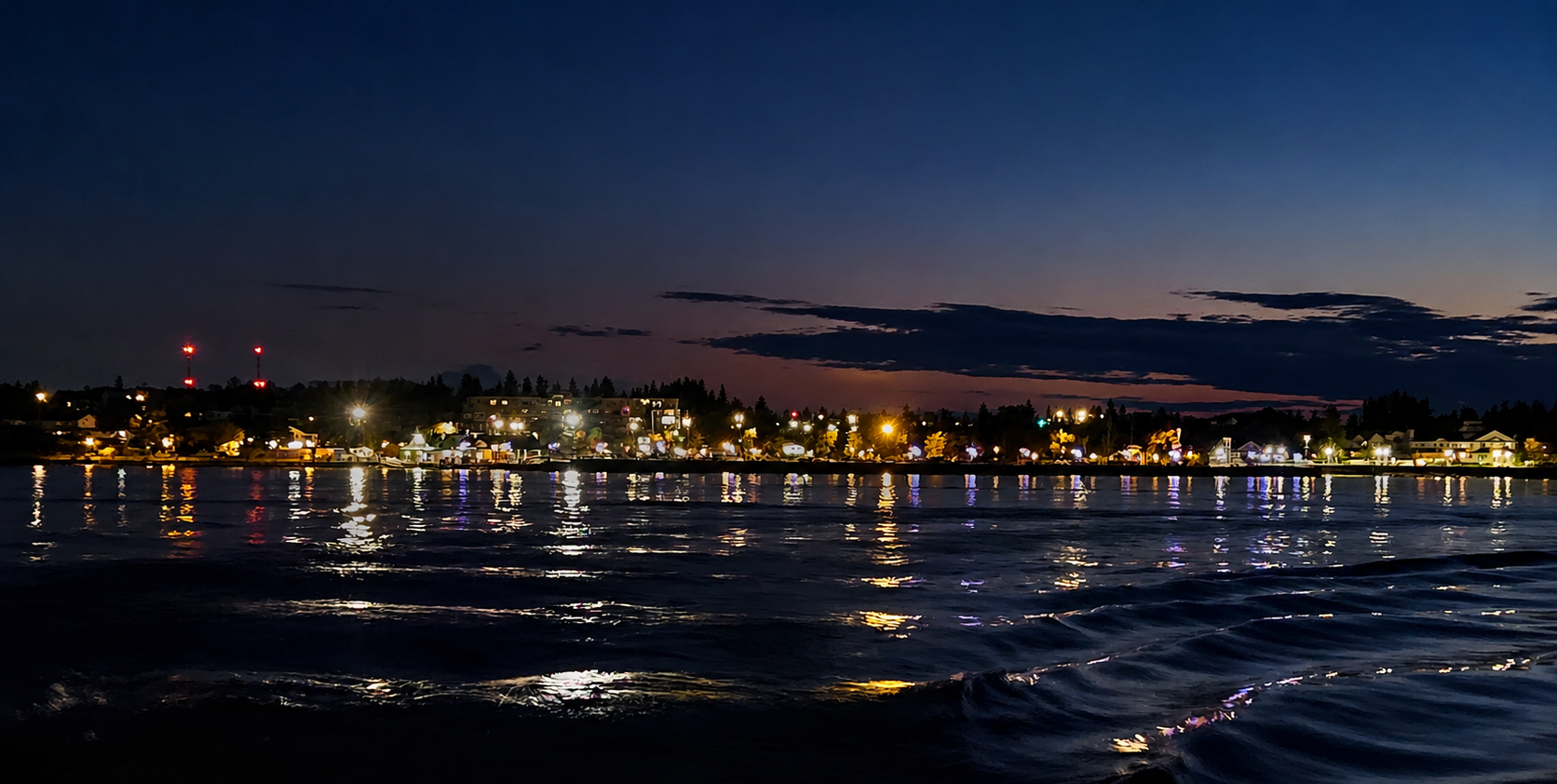
COLD LAKE AB
The Lake I Love A Deep, Wild, and Legendary Magical Cold Lake:
(37,300 hectares)
Cold Lake is one of the crown jewels of the Canadian North—a vast, crystalline body of water known for its remarkable clarity, immense depth, and thriving populations of trophy-sized lake trout. Straddling the border of Alberta and Saskatchewan, the lake stretches across a wild and scenic landscape of thick boreal forest, rocky shorelines, and wide-open northern skies. Its sheer size is impressive: Cold Lake reaches depths of over 325 feet in places, making it the deepest lake in AB and 5th largest lake in AB by area and most productive cold-water lakes in the region.
The water here is famously clear, with shimmering blues and greens that shift with the sun and weather, creating a dramatic backdrop for anglers and outdoor enthusiasts. Because the lake is fed by three rivers and maintained by the region’s cool climate, it stays cold year-round—an ideal habitat for world-class lake trout. This pristine environment allows fish to grow large, and Cold Lake has earned a reputation as a destination where anglers can battle powerful, hard-hitting lakers that push well into monster-size territory.
The surrounding landscape adds to the sense of adventure. Towering spruce and jack pine forests wrap around hidden coves and remote bays, while rugged cliffs and rolling hills create panoramic views that change with every turn of the boat. Wildlife sightings are common—bald eagles soaring overhead, loons calling across the water, pelicans flying by to see what happening and the occasional moose or deer or bear appearing along the shoreline or swimming to the island, all adding to the magic of a day spent on the lake.
Cold Lake offers both serenity and excitement. On calm days, the water can turn to glass, creating a peaceful, almost untouched wilderness setting. During a bit of weather, the lake’s vastness and power are on full display, reminding visitors that this is true legendary water—wild, deep, and alive.
For anglers, adventurers, and nature lovers, Cold Lake is more than just a place to fish. It’s a destination where the northern spirit comes alive: crisp air, endless horizons, and the promise of unforgettable moments on one of Canada’s most striking and storied lakes. Whether you’re chasing the lake trout of a lifetime or simply soaking in the wilderness, Cold Lake delivers a unique experience found nowhere else.
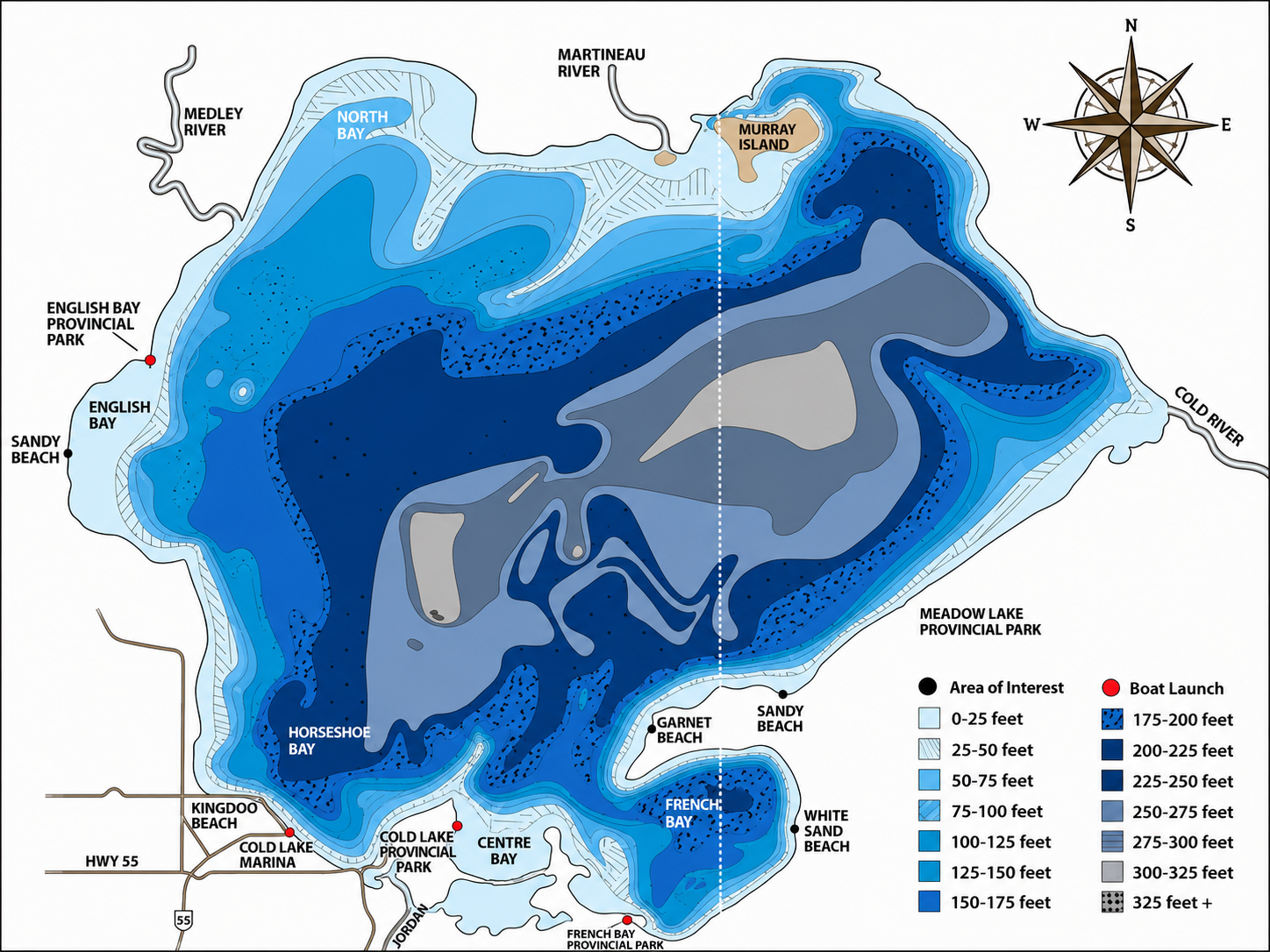
Meeting Spot is at Cold Lake Marina for Pickup at the Marina Address and Map is at The Bottom of The Page
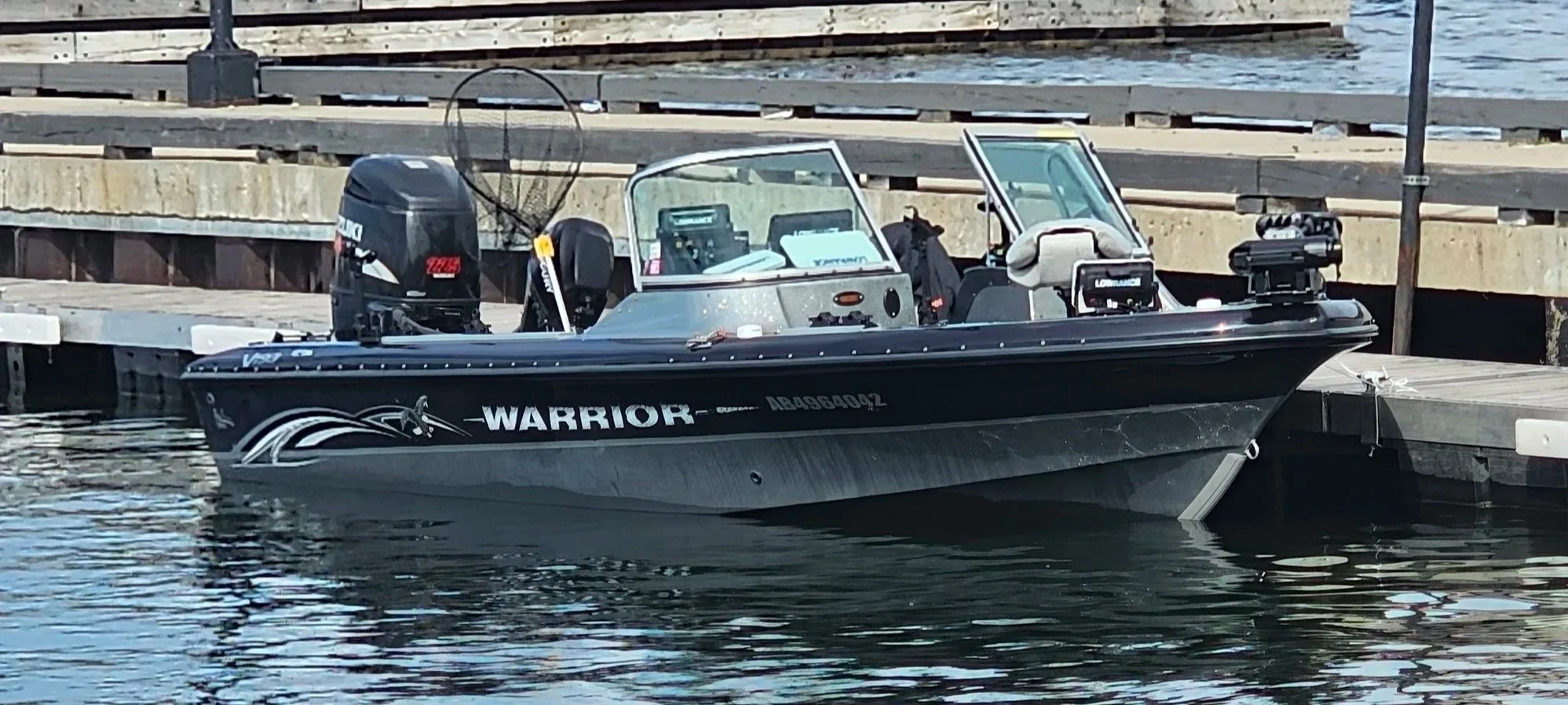
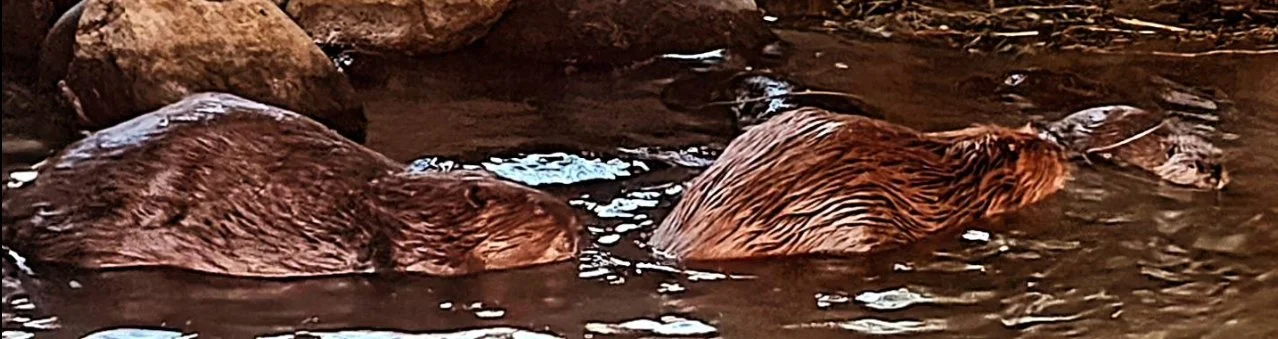
WANT TO SEE WHAT HAPPENING AT THE MARINA NOW YOU CAN
Lake Trout Abundance in Cold Lake
(TO RETAIN SLOT SIZE IS)
(65CM TO 70CM)
(SEASON START TIME DEPENING ON ICE BREAKUP) (START MAY 15 TO SEPT 14 END)
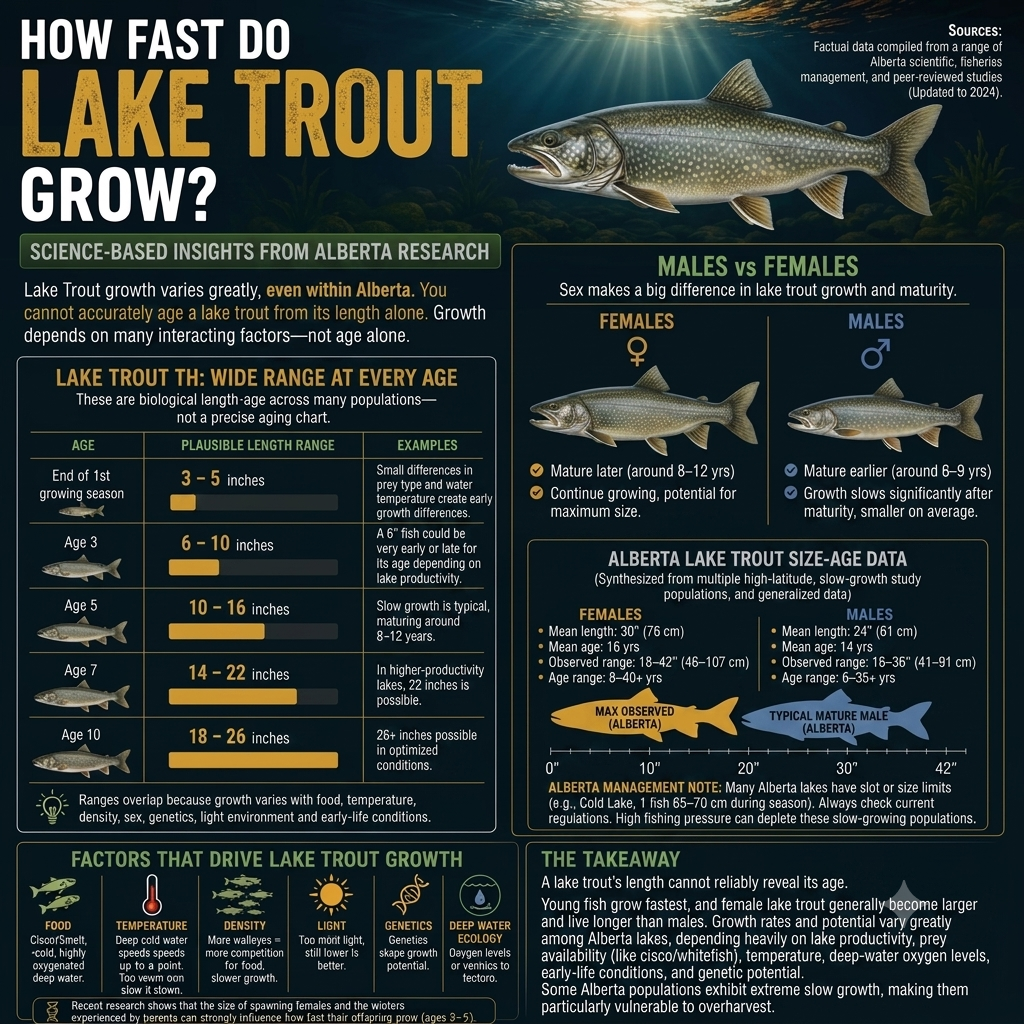
Until 1920 but by the 1940 their number were severely reduced by overfishing. 2 million small lake trout were stocked from 1965 to 1987, and conversation regulation were developed. By the late 1990’s the population had shown positive improvements. The fishery has recovered to a point where limited harvesting can occur but pressure on the fishery is growing with its increasing popularity.
Lake Trout (Salvelinus Namaycush) are most abundant in cold, deep lakes where water temperatures remain low throughout the year. These fish are highly adapted to cold environments and thrive in lakes with clear, well-oxygenated water and temperatures generally in spring, summer on surface from (18C-24C) (64F-75F). Such conditions are commonly found in northern regions and at higher elevations.
Cold lakes provide ideal habitat because they maintain stable thermal layers, especially during summer stratification. Lake trout typically occupy the cold, deep waters below the thermocline. These lakes also support prey species such as walleye, pike, other cold-water forage fish, contributing to healthy lake trout populations.
Healthy cold-water ecosystems support multiple age classes of lake trout, from juveniles to trophy-sized adults. Low fishing pressure, proper harvesting and slot size regulations, and catch-and-release practices help sustain these populations over time. When managed responsibly, cold lakes can consistently produce strong lake trout numbers and exceptional fishing opportunities year after year.
In addition to favorable temperature conditions of cold lake, offer the structure and space lake trout need to grow large and live long lives. Rocky shorelines, steep drop-offs, underwater humps, and deep basins provide important habitat for feeding and spawning. Lake trout typically spawn in the fall over clean, rocky substrates, where cold, oxygen-rich water allows eggs to develop successfully through the winter.
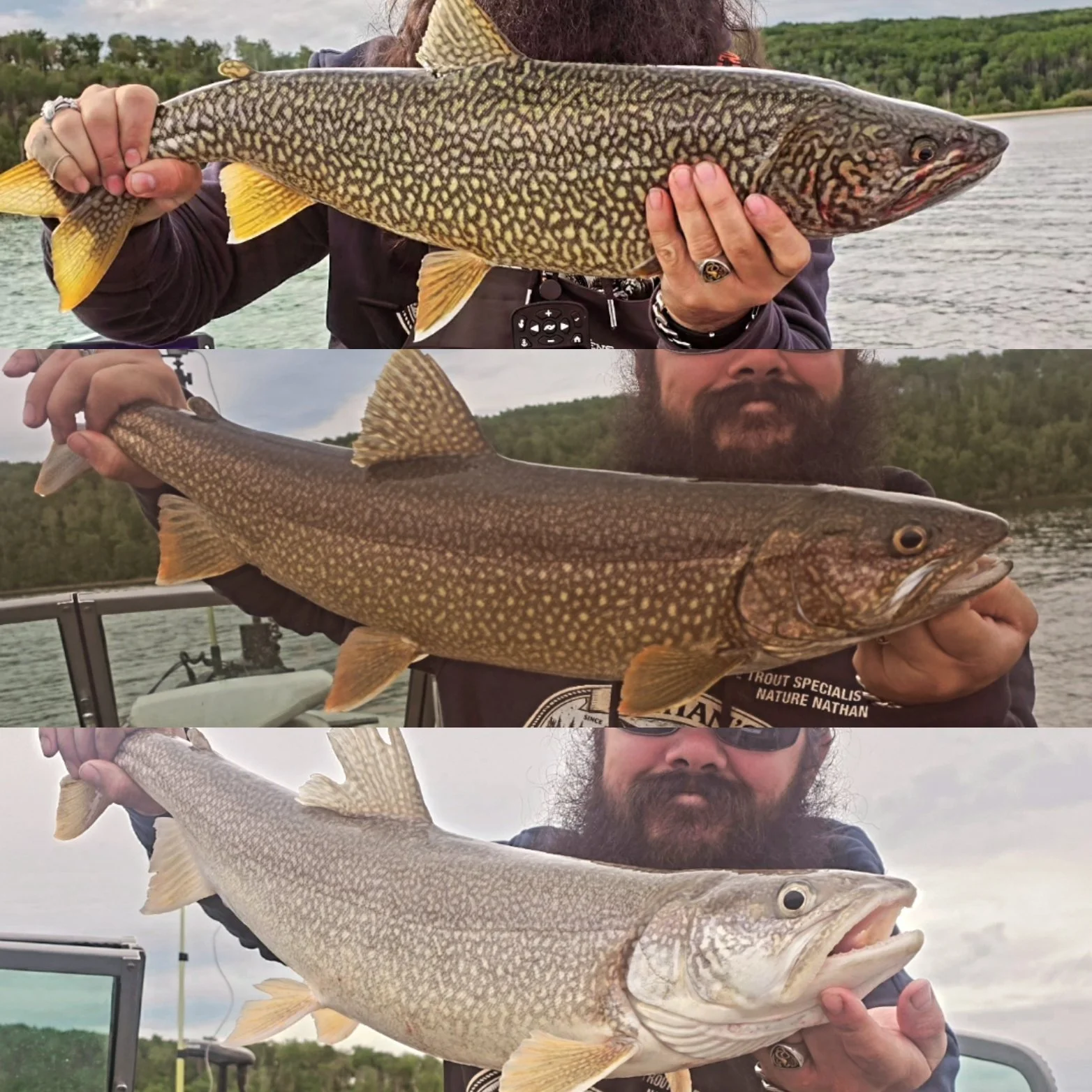
1 TOP FISH LEOPARD — Dark with Strong Yellow markings: likely spent time around darker bottom structure, rocks, or shallower water. The bold pattern can also come from natural genetics and breeding-season color.
2 MIDDLE FISH NATURALLY — Brown/Bronze: a common lake trout color, possibly influenced by darker water, depth, diet, and the background it lives over.
3 BOTTOM FISH HATCHER— Pale Silver/Grey: may have been feeding or travelling in clearer, open, deeper water. Fish photographed in brighter light can also look much more silver.
The Annual Summer Cold Lake Fishing Tournament
Is one of the most exciting events for anglers in northeastern Alberta. Held on the beautiful waters of Cold Lake, the tournament attracts fishing enthusiasts from across the region who come together to compete, connect, and celebrate their passion for fishing.
Each year, the Cold Lake Fishing Tournament brings together both seasoned anglers and newcomers looking to test their skills on the water. The event typically features multiple categories and prizes, rewarding anglers for impressive catches, sportsmanship, and participation. Early mornings on the lake are filled with excitement as boats head out across the water, lines drop, and competitors search for the fish that could land them at the top of the leaderboard.
Beyond the competition, the tournament is also about community, friendship and the shared love of the outdoors. Families, friends, and fishing fans gather around the lake to enjoy the event, exchange stories, and celebrate the incredible fishing opportunities Cold Lake provides. It’s an event that highlights not only the thrill of the catch but also the importance of conservation and responsible fishing practices to protect the lake for future generations.
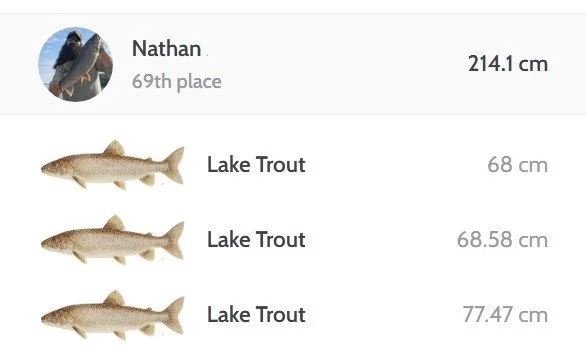
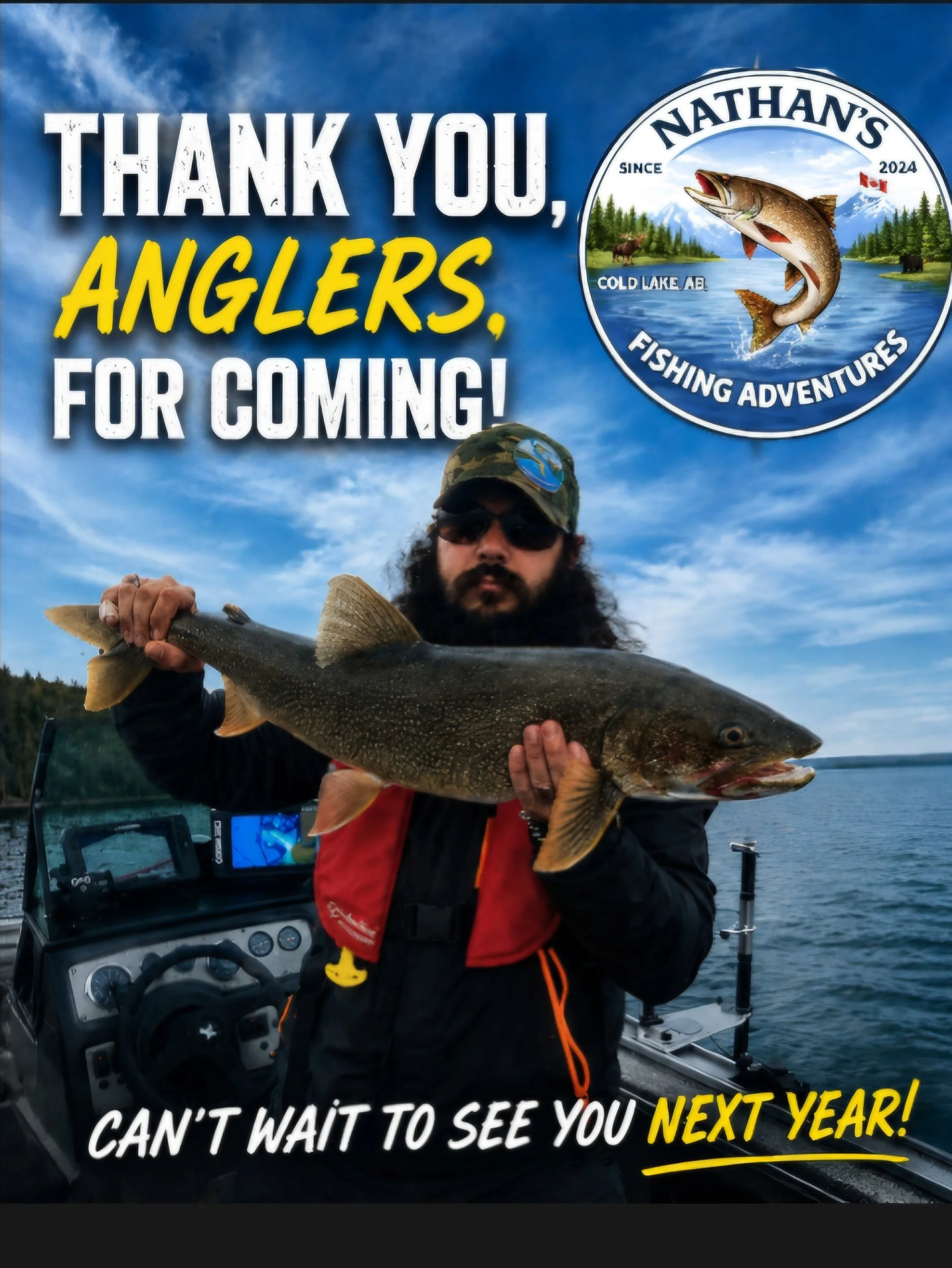
Finished 69th this year with 214.1 cm of lake trout. Not exactly the podium, but in the top 100 though Just means there are 68 anglers. I’m coming for next year. All be ready to improve my standings. That right all be back next year. WATCH OUT !!!